Risk management is probably the least exciting part of trading—until you realise it’s the thing keeping your account alive.
It doesn’t matter if you’re trading forex, stocks, indices, or crypto. Without a solid approach to risk, even a great strategy won’t last long. Markets move unpredictably, and no one has a 100% win rate. What separates the traders who survive (and thrive) from those who burn out is how they manage risk.
If you’re new to trading, this isn’t about scaring you. It’s about giving you tools to stay in the game, protect your capital, and avoid the kind of mistakes that can knock you out early.
Here are the risk management principles that every beginner should learn early… and stick with.
1. Know Your Risk Per Trade
This is the golden rule. Decide before you enter a trade how much you’re willing to lose.
Most experienced traders risk between 0.5% to 2% of their account per trade. So if you have a £5,000 account and you’re risking 1%, your max loss per trade is £50.
No trade should put you in a position to emotionally unravel. If a single loss could ruin your confidence or your account, you’re trading too big.
2. Use a Position Size Calculator (Always)

It’s not enough to say “I’ll risk £50.” You need to work out how many shares, lots, or contracts that means based on your stop loss.
A tool like a position size calculator takes your:
- Account size
- Risk percentage or fixed risk
- Entry and stop-loss levels
- Market type (stocks, forex, indices)
And instantly tells you your correct trade size.
This takes all the guesswork out of sizing. And it ensures you stay consistent.
3. Always Use a Stop Loss
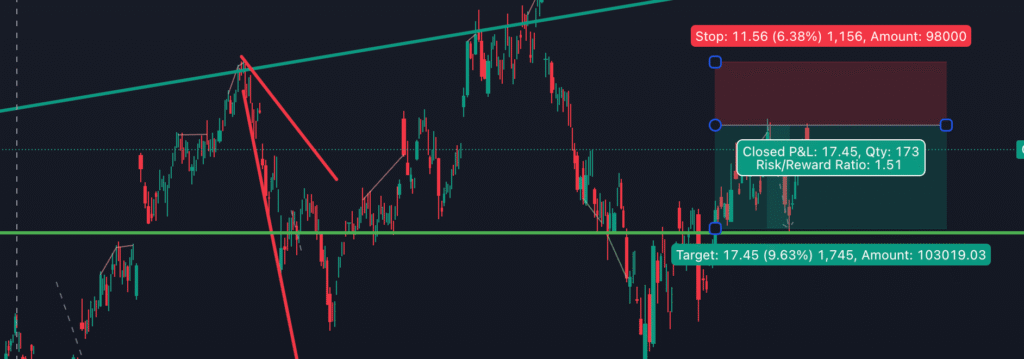
Here’s an example of setting a stop loss in TradingView – If you don’t use a stop loss, you’re playing roulette. Even the best traders are wrong sometimes. A stop loss protects you from letting a bad trade turn into a disaster.
Place your stop at a logical level—not too tight to get wicked out, but close enough to limit the damage if you’re wrong.
A trade without a stop is a trade with unlimited downside. That’s not risk management. That’s hope.
4. Don’t Chase Losses

Everyone takes losses. What separates consistent traders is what they do next.
The worst thing you can do is try to “win it back” with a bigger trade. That’s emotion, not strategy. Take a breath. Review your plan. Come back when you’re clear-headed.
One of the best habits I formed was having a daily stop loss. If I hit it, I’m done for the day.
5. Be Wary of Overconfidence After Wins

Winning streaks can be just as dangerous as losing ones. I’m guilty of this… They make you feel invincible. That’s often when traders start risking more, taking lower-quality setups, or ignoring their plan.
Stick to your position sizing and risk rules even when you’re on a roll. Consistency is what builds an account over time.
6. Adjust Size Based on Trade Quality (But With Rules)

Not all trades are equal. Some setups are cleaner, clearer, and higher conviction. It’s okay to risk a little more on those, but set boundaries.
For example:
- Low conviction = 0.5% risk
- Standard setup = 1% risk
- High conviction = 1.5% risk max
Whatever your approach, define it in advance.
7. Know Your Max Exposure
If you have multiple trades open, they shouldn’t all be risking 1-2% individually – they also ideally should not be correlated. Look at your total exposure.
For example, if you’re long on GBPUSD, EURUSD, and AUDUSD, you might be highly exposed to USD movements. Even if each trade is only 1% risk, a bad move in the dollar could hurt all of them at once.
Be aware of correlation.
8. Track Every Trade
Write down your entries using a manual or electronic trading journal, size, stop loss, and result. Not just to keep score, but to learn.
You’ll spot patterns:
- Are you trading too large after wins?
- Are you skipping stops when you feel “sure”?
- Do you do better with certain setups?
Risk management isn’t just about maths. It’s about learning how you handle risk.
9. Protect Your Mental Capital

Blowing up your account is one thing. Blowing up your confidence is worse. If you feel emotionally frayed, take a break.
Risk management isn’t just about not losing money. It’s about protecting the mindset you need to stay consistent.
10. Accept That Losses Are Part of the Game

The best traders lose trades. It’s how they manage those losses that sets them apart.
Don’t let a losing trade shake your identity. Let it reinforce your system. If you sized it right, stuck to your stop, and followed your rules, it’s a good trade — even if it didn’t work out.
Final Thoughts
Risk management isn’t sexy. It won’t win you bragging rights on Twitter. But it’s what separates the survivors from the blowups.
Start small. Use tools. Stick to your rules. And remember: a trader who manages risk well will always get another shot at the market.

John is a leading investor and experienced trader with over 15+ years investment advising & trading for large firms like HSBC & Barclays. He lends his investment eye over our more financially focused articles and ensures compliance & regulatory standards.