How to Calculate UK Stock Sizes

If you’ve ever looked at a UK stock and seen something like 240 or 800 listed as the price, you’re not alone in wondering—wait, is that pounds? Pence? £240 for one share of Barclays? That can’t be right, can it?
Let’s clear this up straight away.
In the UK, stock prices are almost always quoted in pence, not pounds. So when you see 240, it means 240p—that’s £2.40. If you see 800, that’s 800p, or £8.00. This can throw off new traders, especially those used to US platforms where everything is quoted in dollars and cents. But once you get used to it, thinking in pence becomes second nature.
Back in 2012, when I bought my first UK stock, I genuinely thought the company had just rocketed from £3 to £30 overnight because the price moved from 300 to 3,000. Turns out, I was reading it wrong—and I’d placed a position five times bigger than I meant to. Lesson learned.
Let’s walk through how to size your trades properly when dealing with UK stocks, from FTSE giants like Shell to high-volatility AIM stocks that move 20% in a day.
Why UK Stocks Are Quoted in Pence
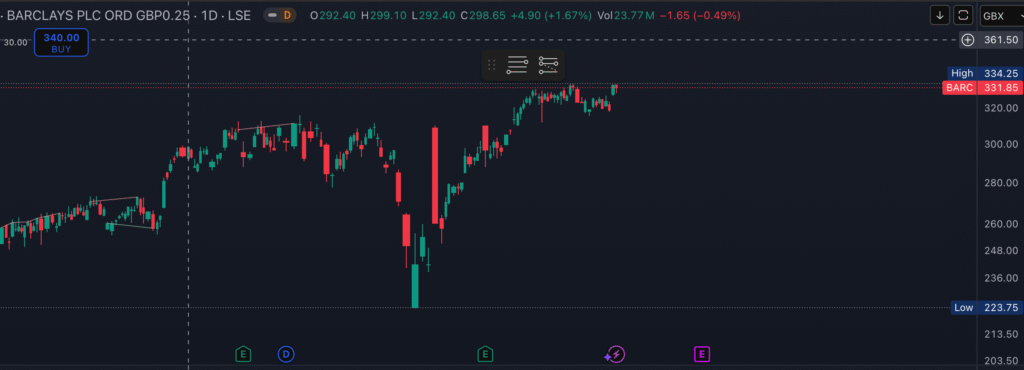
It’s a historic convention. The London Stock Exchange has always displayed prices in pence to avoid using decimals. So instead of £2.40, you’ll see 240p. This has practical value, especially when scanning price levels, managing stops, and comparing trades. It also reduces the chance of decimal place errors—though ironically, it still confuses plenty of traders early on.
Basic UK Stock Position Sizing Formula
The core idea is the same across any market: you want to control how much you lose if you’re wrong.
To size a UK stock trade, you need:
- Entry price (in pence)
- Stop loss price (in pence)
- Risk amount (£)
Step-by-step:
- Entry: 2,400p
- Stop loss: 2,350p
- Risk per share = 50p = £0.50
- Risk capital: £250
Position size = £250 ÷ £0.50 = 500 shares
So you’d buy 500 shares at 2,400p. Total exposure is: 500 × £24.00 = £12,000
That’s your position size. The risk is contained to £250 if your stop fills at the intended level. Of course, a much quicker way to calculate your position size is to use a calculator tool like ours.
Practical Example: Trading Diageo (DGE)
In 2021, I traded Diageo after a clean breakout on the daily chart. Price was around 3,300p. I placed a stop at 3,200p—100p below. That’s £1 per share.
I was happy to risk £300 on the trade, so:
- £300 ÷ £1 = 300 shares
- 300 × £33.00 = £9,900 position
That meant just under 10% of my portfolio was allocated to the trade, and I had a clean, mechanical exit. It didn’t rip, but I banked 2R a week later. No stress.
Large Caps vs Small Caps: How Position Sizing Changes
Now here’s where things get interesting. Position sizing changes dramatically depending on the kind of stock you’re trading. A FTSE 100 blue-chip and an AIM-listed microcap behave very differently.
Liquidity and Spread
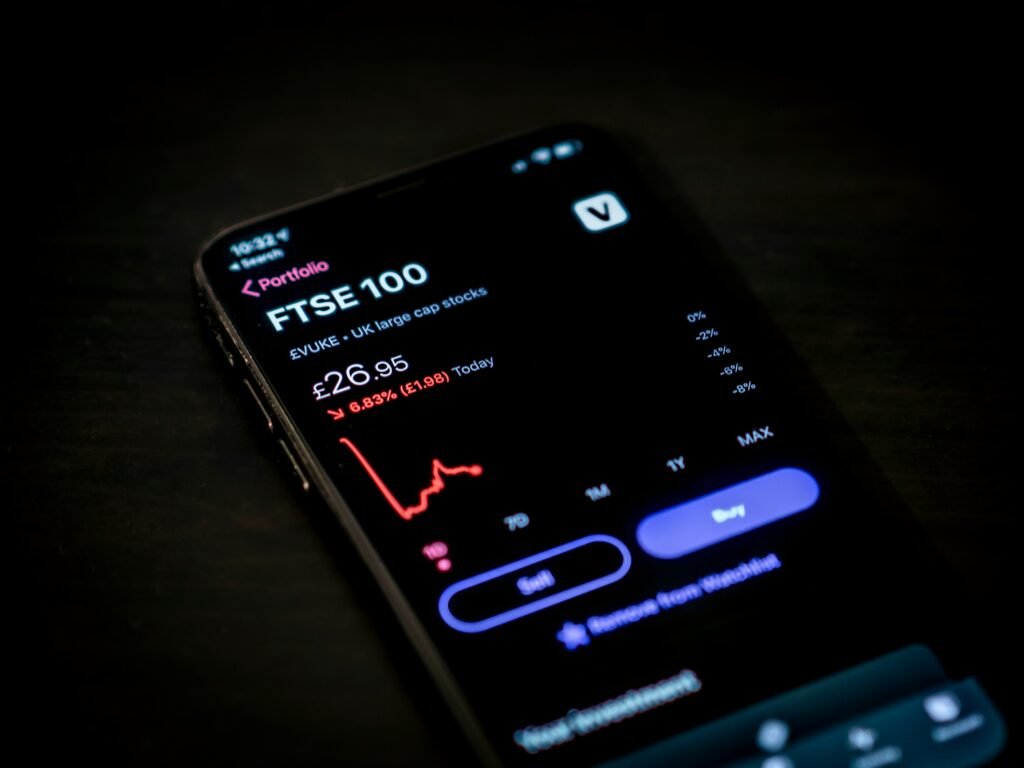
When I trade large caps, I’m comfortable risking 1–2% of my account on a single trade because I can rely on stop orders to fill fairly accurately – that’s because of liquidity. It essentially means that there are plenty of other players in the market who are able to buy if I want to sell and vice-versa.
- Large caps (e.g. AstraZeneca, HSBC): high liquidity, tighter spreads, lower slippage.
- Small caps (e.g. AIM stocks like ITM Power or TERN): wide spreads, lower volume, greater gap risk.
With small caps I often cut risk in half, sometimes even lower. I’ve seen microcaps gap 20% overnight on nothing but a rumour. A few years ago, I was trading a biotech stock listed on AIM. News came out at 7:01am. By the open, the price had gapped down 30%. My stop at 110p filled at 90p. That was double the risk I’d intended.
Since then, I adjust size for:
- Gap risk: trade smaller on volatile names
- Liquidity: avoid full-size entries in illiquid stocks
- Spread: include it in your stop size when planning
How to Adjust Position Size for Small Caps

If you normally risk £200 per trade, try reducing that to £100 or even £75 when trading:
- Anything under £1.00
- Stocks with <£5m daily volume
- Stocks up 100%+ in the last 2 weeks
You can also increase stop distance to allow for volatility. Instead of a 5p stop on a 70p stock, try 10p—but reduce size accordingly.
Example:
- Stock at 70p
- Stop at 60p = 10p risk
- Risk capital = £100
Position size = £100 ÷ £0.10 = 1,000 shares
Position Sizing for News-Based Trades

When trading UK stocks on news (earnings, RNS, or economic data), I treat position sizing differently. News amplifies volatility and slippage risk.
Here’s my general rule:
- If holding into earnings: half my usual size
- If trading post-earnings momentum: use smaller stops but scale in
Example: I once took a trade in Barclays post-earnings. Price spiked from 140p to 150p. I entered on a flag at 148p with a stop at 144p. That’s 4p of risk. I risked £120.
£120 ÷ £0.04 = 3,000 shares Total position: 3,000 × £1.48 = £4,440
Tight stop, higher size—but the setup was clean, volume was high, and I was out in two hours.
Final Thoughts
The mistake most traders make—myself included, in the early days—is choosing how many shares to buy based on capital or intuition. “I’ll buy £2,000 worth of this,” they say. But that’s not sizing. That’s guessing.
If you want to survive in this game, you need to size based on risk. Whether it’s Diageo or a tiny energy stock on AIM, the formula stays the same.
The real skill is adjusting that formula to fit the volatility, spread, and gap risk of each trade. That’s what separates the casual traders from the consistent ones.
So start every UK stock trade with a simple question: what’s the max I’m willing to lose here? Answer that, then size the position around it. The rest is just numbers.

John is a leading investor and experienced trader with over 15+ years investment advising & trading for large firms like HSBC & Barclays. He lends his investment eye over our more financially focused articles and ensures compliance & regulatory standards.