Position Sizing in Spread Betting vs Stock Investing vs CFD Trading

As a UK trader I’ve tried it all: CFD trading, spread betting, and investing. Trust me, calculating position sizes across all of them is pretty tough going.
I learned this the hard way. Back in 2013, I’d just started spread betting. I’d watched a few (poorly made) YouTube videos, opened a £1,000 account, and felt ready. I placed a trade on the FTSE at £10 per point with a 30-point stop. It looked smart on paper—until the market moved against me, and I lost £300 in an hour. That trade taught me more than any course ever has.
Let’s walk through how position sizing works across spread betting, stock investing, and CFDs—using real numbers, real experience, and lessons I wish I’d understood earlier. This time, we’ll go deeper, slower, and more practically into the differences, calculations, and risks involved.
Position Sizing for Spread Betting
Spread betting is a favourite among UK traders, – I mean it’s where I first got started. It’s tax-free and feels simple. You choose your stake per point—£1, £5, £10—and set your stop.
But that simplicity hides risk. In 2016, I was swing trading GBP/USD after the Brexit vote. The volatility was wild. I placed a short position at £15 per point, thinking the stop was tight enough. I didn’t consider the slippage or the wider spreads. That trade gapped through my stop and cost me £700 on a £5,000 account.
Here’s how to size it properly:
- Let’s say you have £10,000.
- You want to risk 1% on a trade (£100).
- Your stop loss is 25 points.
£100 ÷ 25 = £4 per point.
That’s your stake. If the market moves 25 points against you, you lose £100. But remember: spread betting gives you exposure. If you’re trading the FTSE and it’s trading at 7,500, a £4 per point stake means you’re effectively trading £30,000 worth of index.
That exposure matters. I once thought I was being cautious with a £3 per point position on the DAX. I forgot that DAX moves much faster than FTSE. Within minutes, I was £180 down.
Margin also plays a role. Most brokers ask for 5–10% margin. For a trade worth £10,000, you might only need £500 up front. This tempts people to overtrade. Just because you can open four trades doesn’t mean you should.
Using ATR and Volatility for Sizing in Spread Betting
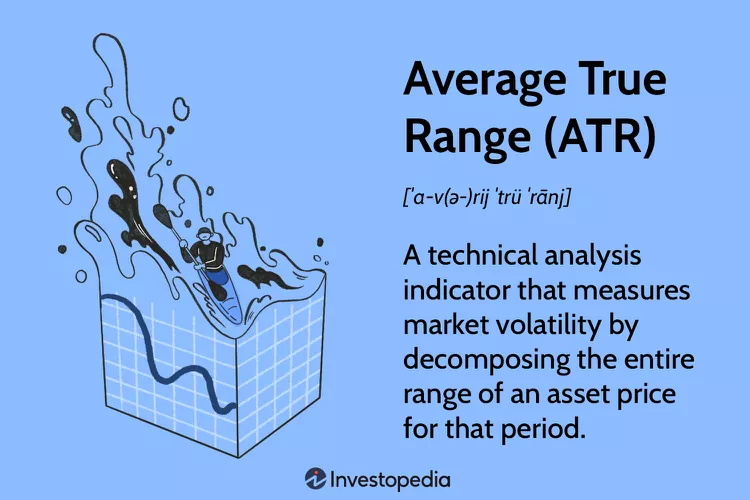
One mistake I made early was setting all stops at 20 points. That’s neat but wrong. Some assets move 100 points a day (DAX), others just 20 (FTSE in quiet times). I now use ATR (Average True Range) to judge how much the market moves.
If FTSE’s ATR is 40, I’ll often place a stop 1.5x that—so 60 points. Then I size:
- £100 ÷ 60 = £1.66 per point.
Suddenly, I’m risking the same amount, but my trade has room to breathe. That adjustment alone cut my number of stop-outs in half.
Position Sizing for UK Stock Investing
With investing, you’re buying real shares—no leverage unless you specifically ask for it. This means you need more money to take meaningful positions, but the risk is easier to control.
I remember buying Lloyds shares in 2018. They were trading around 55p. I set a stop at 50p and bought 2,000 shares. The trade cost just over £1,100. My risk was £100. It moved in my favour, but slowly. I held the position for six months.
Here’s how the calculation works:
- Tesco is at 250p.
- You place a stop at 235p. That’s 15p of risk.
- You’re happy to risk £150.
£150 ÷ £0.15 = 1,000 shares. 1,000 × 250p = £2,500 investment.
That’s fine if you have capital – lots of it… But it means you’re allocating 25% of a £10,000 account to one trade. If you want to hold 10 stocks, that doesn’t leave much flexibility.
Plus, you can’t always buy the perfect amount. You can’t buy 875.6 shares. It’s either 875 or 876. Over time, that matters.
Another challenge: stocks can gap. Your stop loss might not fill at 235p. If earnings miss overnight, Tesco might open at 220p. That’s £300 lost instead of £150. So sizing based on gaps—not just stops—is key.
Position Sizing for CFD Trading
CFDs offer the most flexibility. You can scale up or down to the contract. You can short. You can hold overnight. And the leverage is real. That’s both the appeal and the trap.
I once traded gold CFDs after the US inflation print. I set a $2 stop and bought 100 contracts. Gold spiked, I was up £400 in five minutes. Then it reversed. I froze. By the time I closed, I was down £500.
The problem wasn’t the idea. It was size. I’d ignored the fact that 100 contracts at $1,900 meant nearly £150,000 of exposure. And gold can swing $10 in minutes.
Here’s how to size it better:
- £200 risk
- $2 stop
£200 ÷ $2 = 100 contracts.
If you want to be safer:
- Use a $5 stop
- £200 ÷ $5 = 40 contracts
Same risk. Less stress. More breathing room.
CFDs also vary by product. A CFD on Lloyds (1 contract = 1 share) is very different from a CFD on the DAX (1 contract = €25 per point). Know your product specs. Always.
Example: Trading with BP across Three Different Trading Accounts
OK I’ll give you a practical example. Let’s use BP as an example. Let’s say:
- Entry: 500p
- Stop: 480p
- Risk: 20p
- Max risk: £100
Spread Bet: £100 ÷ 20p = £5 per point. Straightforward.
Investing: £100 ÷ £0.20 = 500 shares → £2,500 trade
CFD: 500 contracts. With 5% margin = £125 required
All three trades have the same risk. But look at the capital:
- Spread bet = £500 margin
- Investing = £2,500
- CFD = £125–£250
That’s why people love CFDs. But it’s also why they blow up accounts.
Other Sizing Considerations
- Currency conversion: If you trade USD instruments with a GBP account, your risk fluctuates. Use pip calculators that adjust for base currency.
- Commission: Some CFDs have a cost per contract. Size down slightly to cover that.
- Platform quirks: Some platforms round stake sizes, or limit micro sizes.
- Psychological sizing: For bigger accounts, risking £500 per trade feels fine. But the first time I did it, I hesitated. Know your comfort zone.
Lessons I’ve Learned the Hard Way
- Never size based on feeling. Use maths. Then trust it.
- Don’t let one win tempt you to double up. That’s how you break a system.
- Adjust size for volatility. Fixed stakes don’t suit variable markets.
- Know your product: one Nasdaq contract is not the same as one Lloyds share.
- Always plan your exit before you enter.
Final Thoughts
Good sizing doesn’t make bad trades good. But bad sizing can make good trades painful.
Today, I calculate my stock position size before every trade. I use position size calculators. I’ve built a spreadsheet with my default risk per trade, risk per strategy, and volatility tiers. That’s what keeps me consistent.
And I no longer see position sizing as admin. I see it as the trade itself. Because once the size is right, everything else becomes easier—emotionally, mentally, and practically.
If you’re trading across products, this is the skill to master. Not entries. Not indicators. Position sizing. Because without it, nothing else lasts.

James is a full-time UK-based trader for prop firms and using private capital since June 2010. Based in the Edinburgh, Scotland he has been active in the UK finance space for the last 10 years and helps other UK traders and investors calculate lot sizing, position sizing and investing with helpful tools.